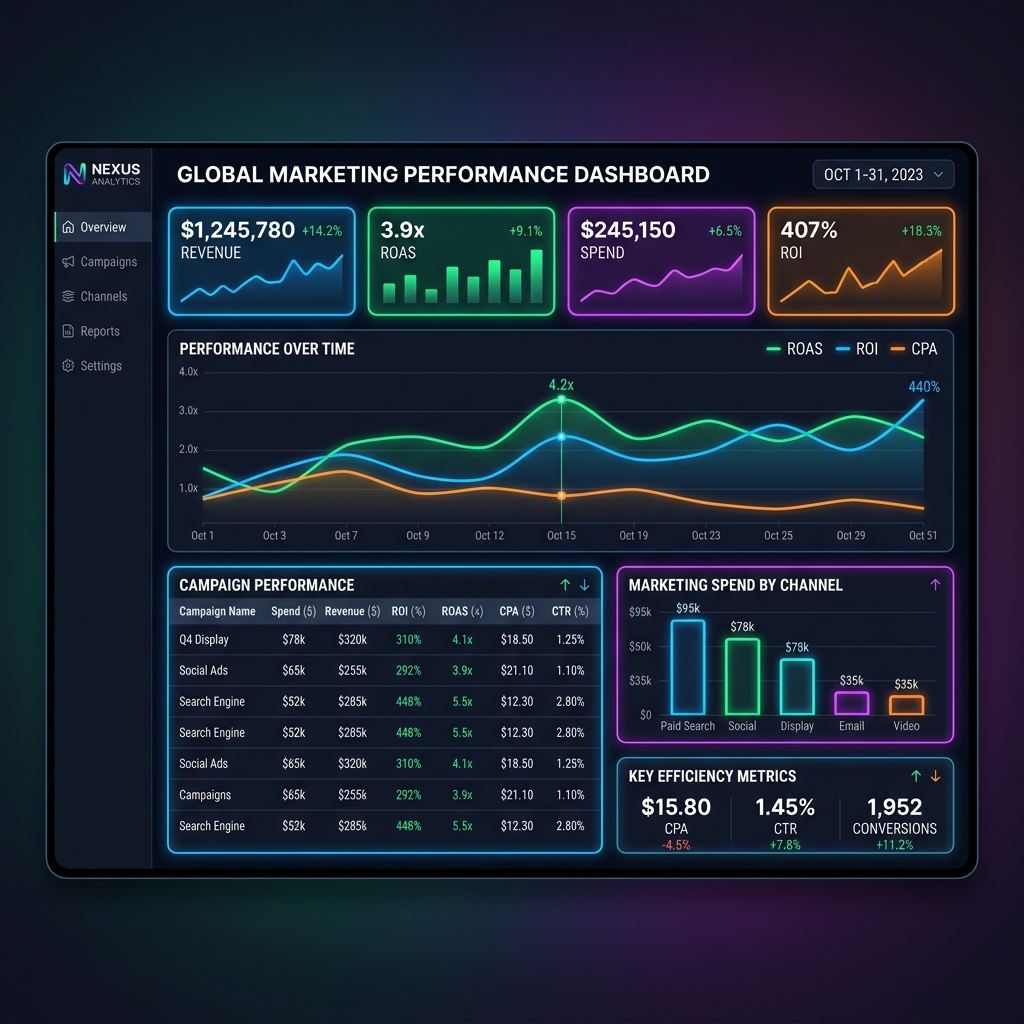
Updated scope, 24 September 2026: Performance marketing is a measurement discipline as much as a channel discipline. Define the business objective, event quality, attribution limits, experiment design, and decision rule before judging a campaign.
Salary context: Pay ranges in this article are retained estimates from its earlier edition, not a newly verified survey. Check dated sources for comparable roles, experience, location, and fixed versus total pay before relying on them.
Overview
Performance marketing plans and evaluates campaigns against measurable goals, such as qualified enquiries or purchases. The billing model is separate: an advertising platform may charge for impressions or clicks even when no sale follows. Define the business outcome, then check both delivery costs and conversion quality.
If traditional marketing is an art, performance marketing is an applied science. It is the engine that drives rapid growth for D2C brands, SaaS platforms, and modern tech startups.
Key Takeaways
100% Attributable
Every ad click, landing page view, and final purchase is tracked using pixels and analytics. You know exactly which ad drove which sale.
The Duopoly
Most performance marketing budgets are split between Google Ads (capturing search intent) and Meta Ads (generating visual demand).
Core Economics
Success relies on Unit Economics: making sure your Customer Acquisition Cost (CAC) is significantly lower than your Customer Lifetime Value (LTV).
Ad Creative is King
Because targeting algorithms have become so automated, the most powerful lever a performance marketer has is the actual ad creative (the video or image).
The Performance Marketer's Dictionary: Core Metrics
To succeed in performance marketing, you must fluently speak the language of metrics. Here are the core KPIs (Key Performance Indicators) you will track daily:
1. CPM (Cost Per Mille)
The cost of showing your ad 1,000 times. This tells you how expensive it is to buy advertising space on a platform right now.
2. CTR (Click-Through Rate)
The percentage of people who saw your ad and actually clicked it. A high CTR (e.g., 2%+) means your ad creative and copy are highly engaging to the target audience.
3. CPC (Cost Per Click)
How much you pay every time someone clicks your ad. Lower CPCs mean cheaper traffic, but you also need to ensure the traffic is high-quality.
4. Conversion Rate (CVR)
The percentage of people who clicked your ad, landed on your website, and actually completed the desired action (like buying a product). A typical e-commerce CVR is around 1% to 3%.
5. CAC (Customer Acquisition Cost)
The total marketing spend divided by the number of new customers acquired. If you spend ₹10,000 on ads and get 20 new customers, your CAC is ₹500.
6. ROAS (Return On Ad Spend)
Total revenue generated from the ads divided by the total ad spend. If you spend ₹1,000 and generate ₹4,000 in sales, your ROAS is 4.0x. This is the holy grail metric for e-commerce marketers.
The Major Performance Channels
Where do performance marketers actually spend the money? While there are many channels, the bulk of budgets go to these key platforms:
Google Search Ads (Intent Capture)
When someone types "buy running shoes online" into Google, they have high intent. They want to buy right now. Performance marketers bid on these keywords. You pay Google every time someone clicks your search ad (Pay-Per-Click or PPC).
Meta Ads (Facebook & Instagram)
Unlike Google, people on Instagram aren't actively searching to buy things. They are scrolling for entertainment. Meta Ads are used for demand generation. You show them a highly engaging video of running shoes, interrupting their scroll and generating the desire to buy.
Landing Page Optimization
Getting a click is only half the battle. If your landing page takes 10 seconds to load, or the "Buy Now" button is hidden, the user will leave. Performance marketing involves constant A/B testing of landing pages to improve the Conversion Rate.
Performance Marketing Salary & Career Data
Performance marketing is one of the highest-paying marketing fields because you are directly responsible for revenue. For a detailed breakdown of how this compares to organic roles, see our guide on SEO vs Performance Marketing.
| Experience Level | Role | Average Salary Range (INR) |
|---|---|---|
| 0-1 year (Fresher) | Performance Marketing Executive | ₹4L – ₹7L |
| 2-4 years | Performance Marketing Manager | ₹8L – ₹15L |
| 5+ years | Head of Growth / VP of Marketing | ₹18L – ₹35L+ |
Is the ISS Marketing & Growth programme right for you?
Review the curriculum for campaign planning, measurement, and marketing projects. Compare the learning format, weekly commitment, fees, and support with your goals before applying.
View Marketing & Growth curriculum →Common Mistakes Beginners Make
- Optimizing for Clicks, Not Conversions: Beginners often get excited by a low Cost Per Click (CPC). But if none of those cheap clicks actually buy the product, the money is wasted. Always optimize for the final conversion (ROAS/CAC).
- Ignoring the Ad Creative: The algorithm handles the targeting now. If your ad fails, it's usually because your video or image is boring. Test multiple creative angles.
- Making the Landing Page an Afterthought: You can have the best ad in the world, but if your landing page doesn't match the promise of the ad, the user will bounce immediately.
How to Build a Performance Marketing Portfolio
Unlike graphic design, a marketing portfolio isn't just about making things look pretty. It's about proving you can generate ROI. A strong performance marketing portfolio should include:
- Campaign Strategy: Who was the target audience? What was the goal?
- Ad Creatives: Show the actual images or videos you ran.
- The Results: Use charts showing how much you spent, the CPC, the CAC, and the final ROAS. Explain what you learned from the data.
Check out our Digital Marketing Portfolio for Freshers guide for more details.
Frequently Asked Questions
What is the difference between performance marketing and digital marketing?
Digital marketing covers channels such as search, email, social media, and advertising. Performance marketing focuses on measurable campaign goals. The platform may bill for clicks or impressions, so measured performance and the billing model should be assessed separately.
What is ROAS in performance marketing?
ROAS stands for Return On Ad Spend. It measures how much revenue is generated for every rupee spent on advertising. A ROAS of 3.0 means you make ₹3 for every ₹1 spent.
Which platform is best for performance marketing?
It depends on the product. Google Ads is best for capturing high-intent users actively searching for a solution. Meta Ads (Facebook/Instagram) is best for generating demand and pushing visual products like D2C apparel.
Do I need to be good at math to be a performance marketer?
You don't need advanced calculus, but you must be comfortable with basic arithmetic, percentages, and data analysis to calculate CAC, CTR, and ROAS efficiently.
How do I build a performance marketing portfolio?
Show a campaign plan, sample creative, budget assumptions, and a measurement approach. Label simulations clearly. If you run a live test, use a budget you can afford and report the actual results, including unsuccessful tests.
Editorial scope
This article provides an editorial learning guide, not a survey of hiring outcomes. Examples illustrate approaches to practice; they do not predict employment or pay.
Conclusion & Next Steps
Performance marketing is the engine of modern digital commerce. By mastering platforms like Meta and Google, understanding unit economics, and rigorously testing ad creatives, you become the person directly responsible for a company's revenue growth.
Ready to start running real campaigns? Apply for the ISS Marketing & Growth Program and get hands-on with real ad spend.
Check the billing model before comparing results
A campaign can optimise towards conversions while being billed for clicks or impressions. Track ad spend and verified outcomes separately. For example, if you spend ₹2,000 and record 10 purchases, cost per purchase is ₹200; that figure alone does not show profit.
Reference: Google Ads bidding guidance. Different campaign types and strategies have different billing and optimisation rules.